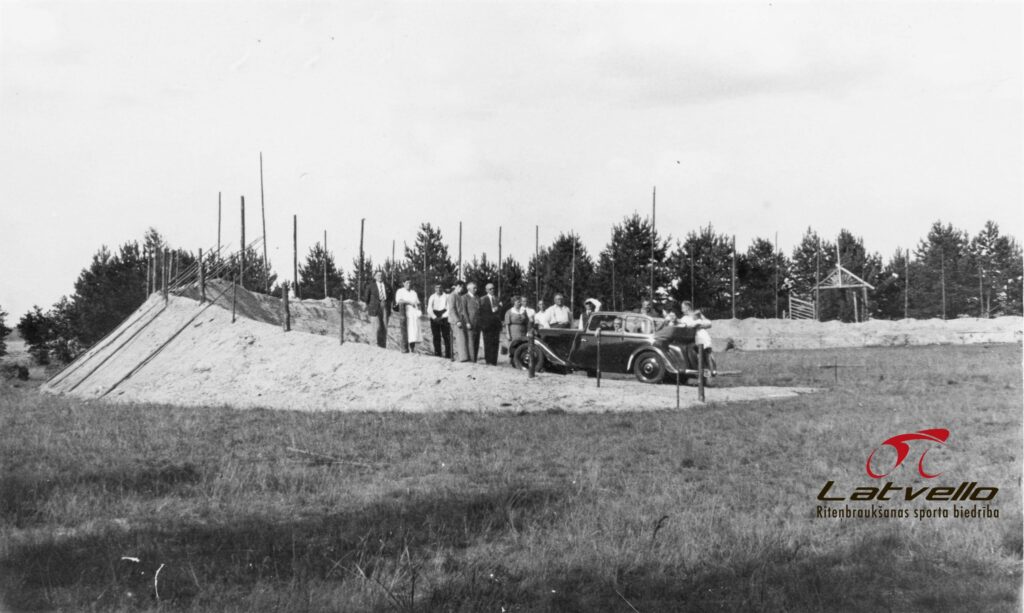
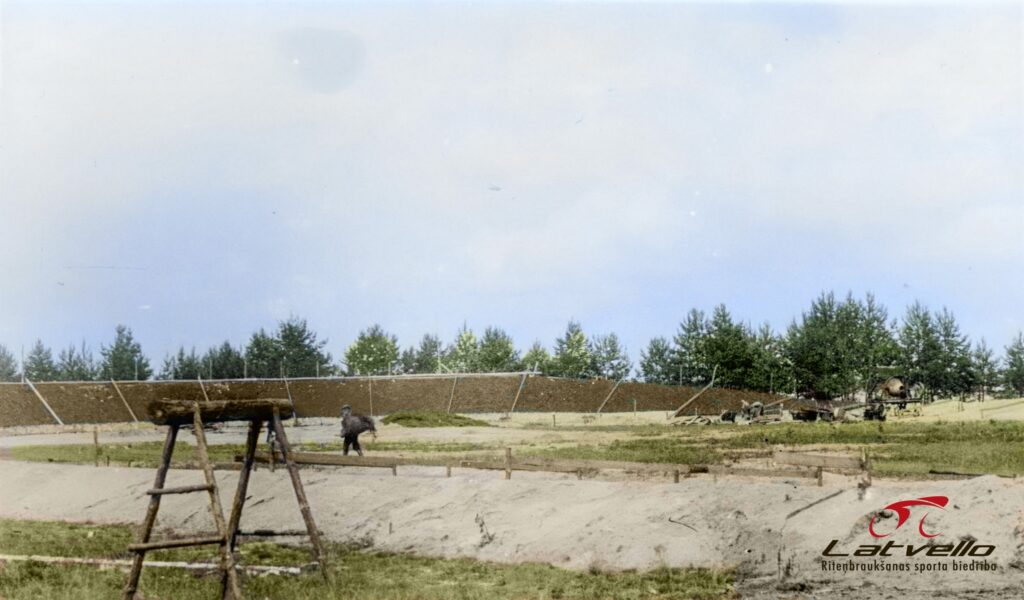
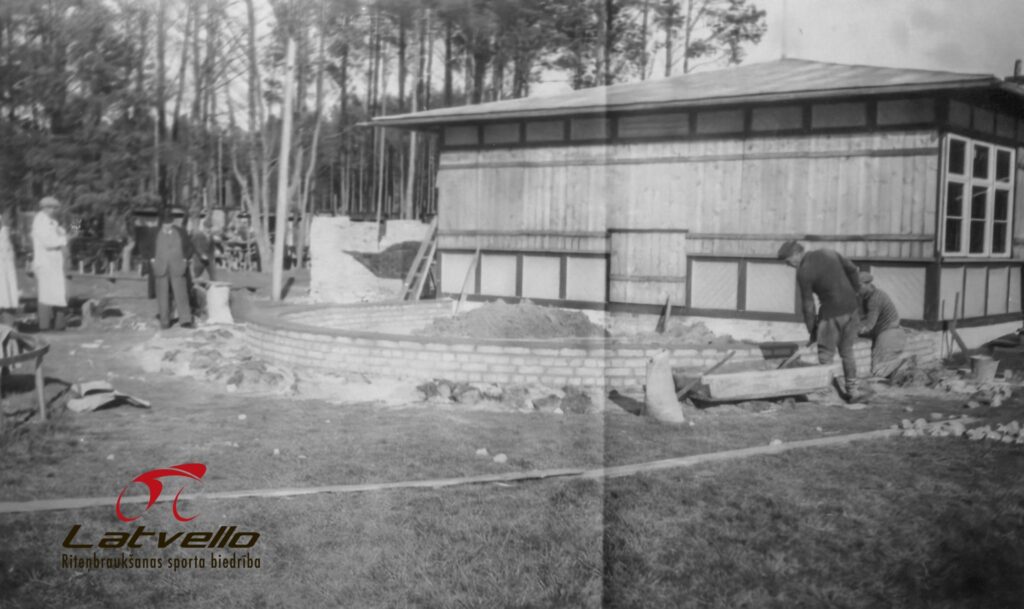
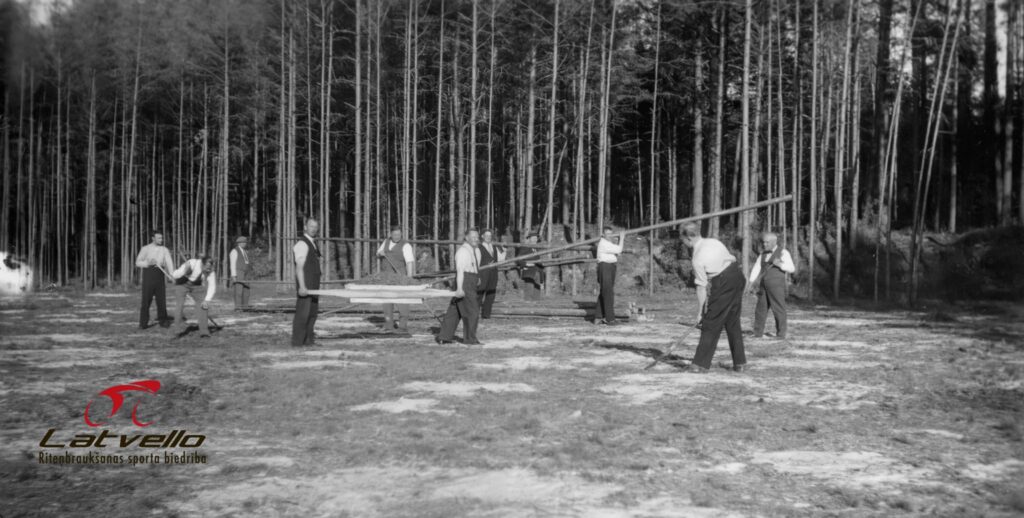
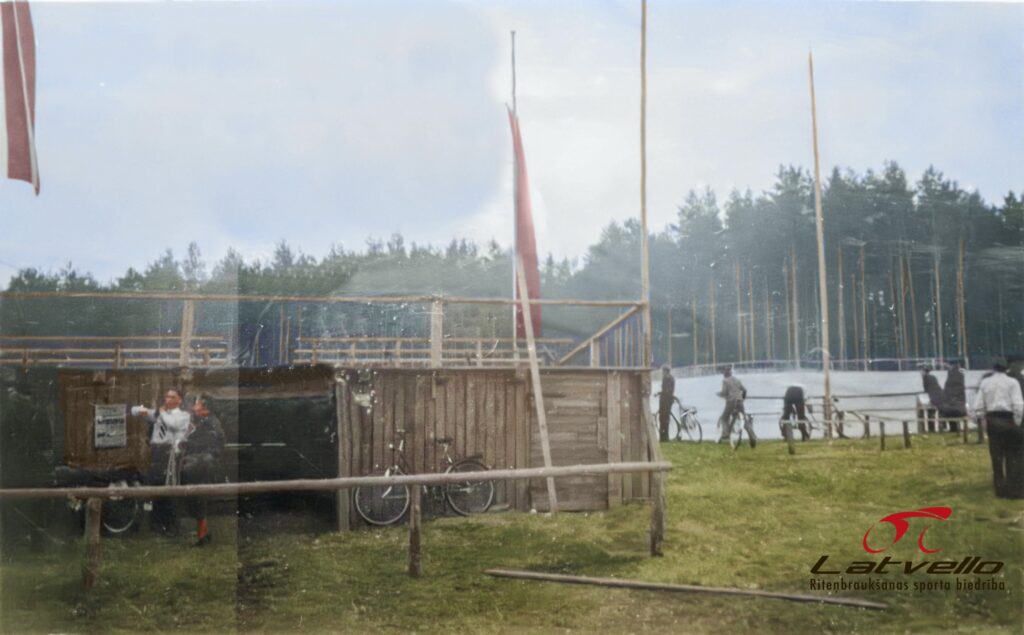
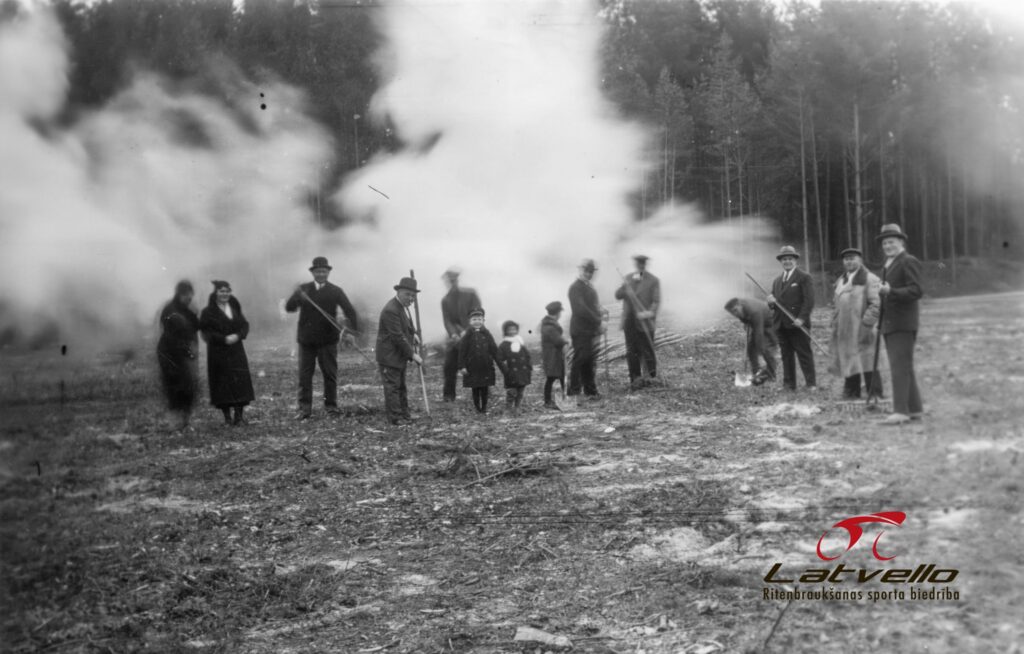
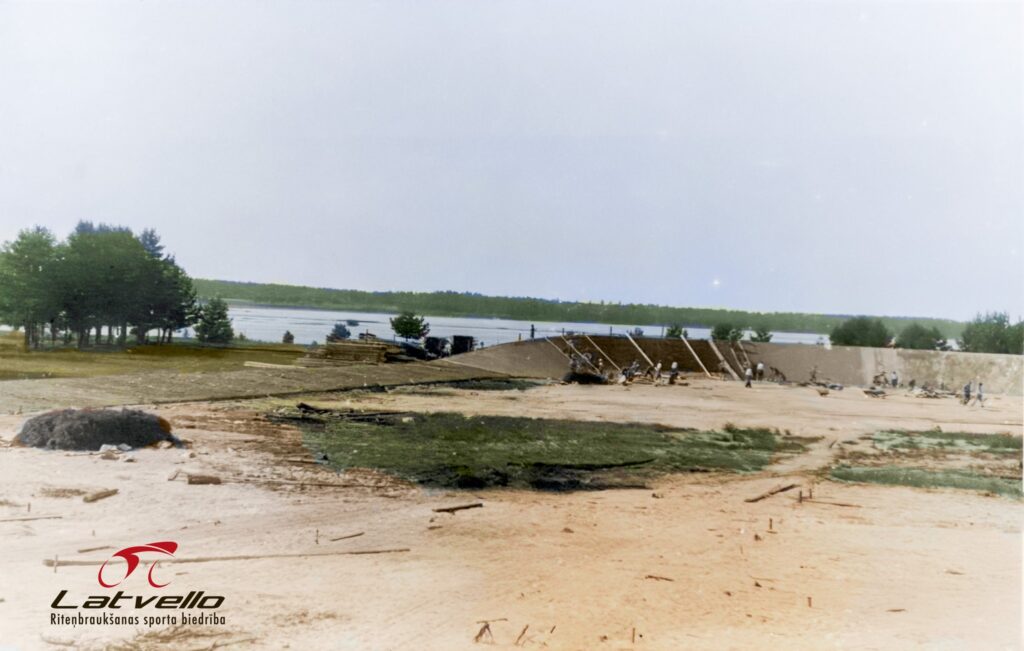
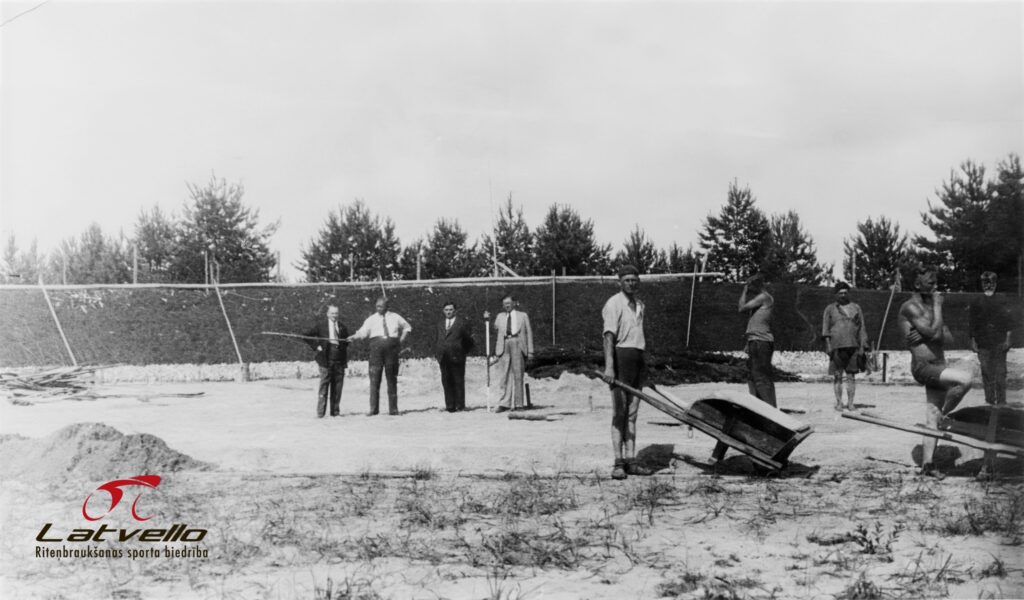
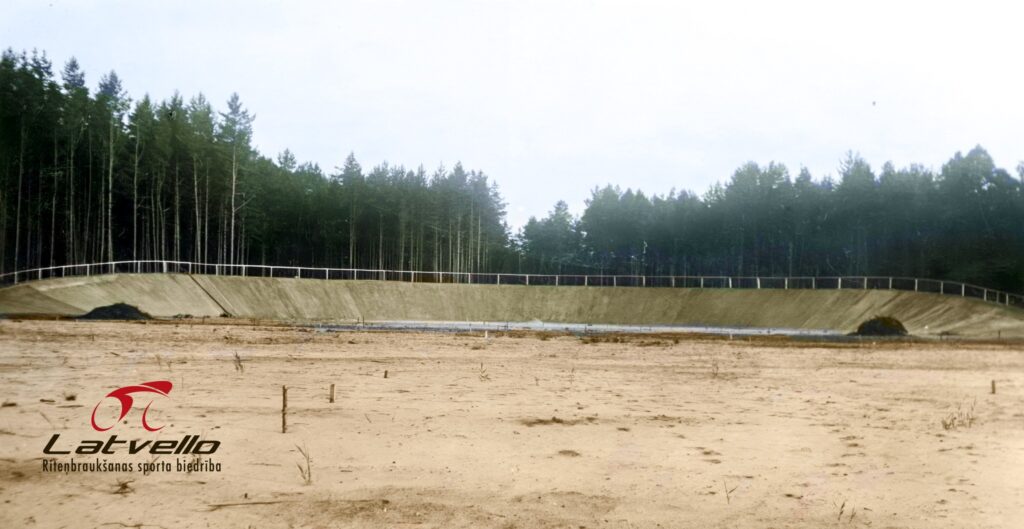
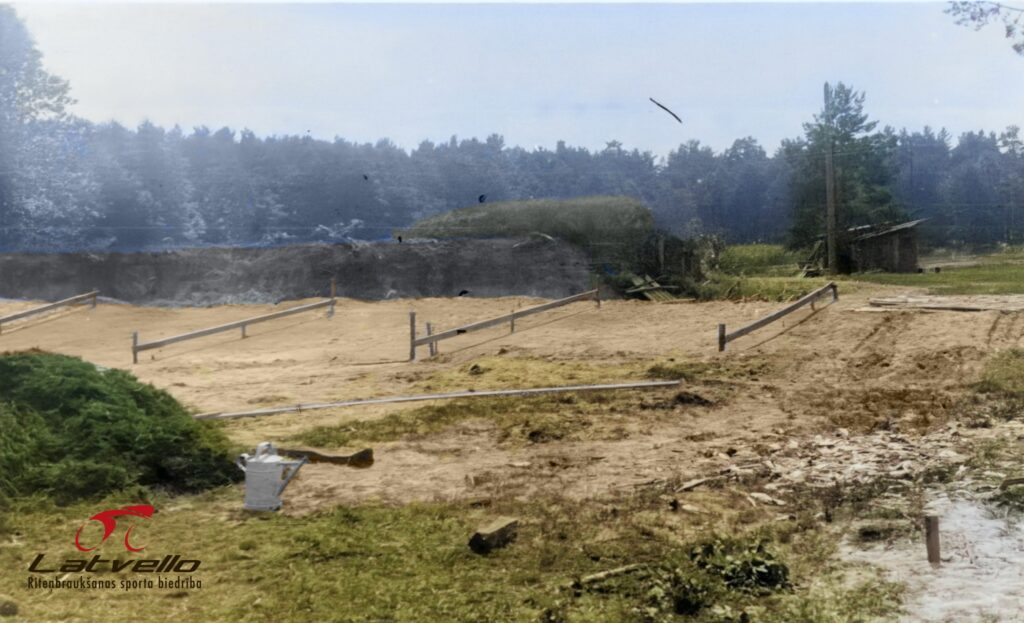
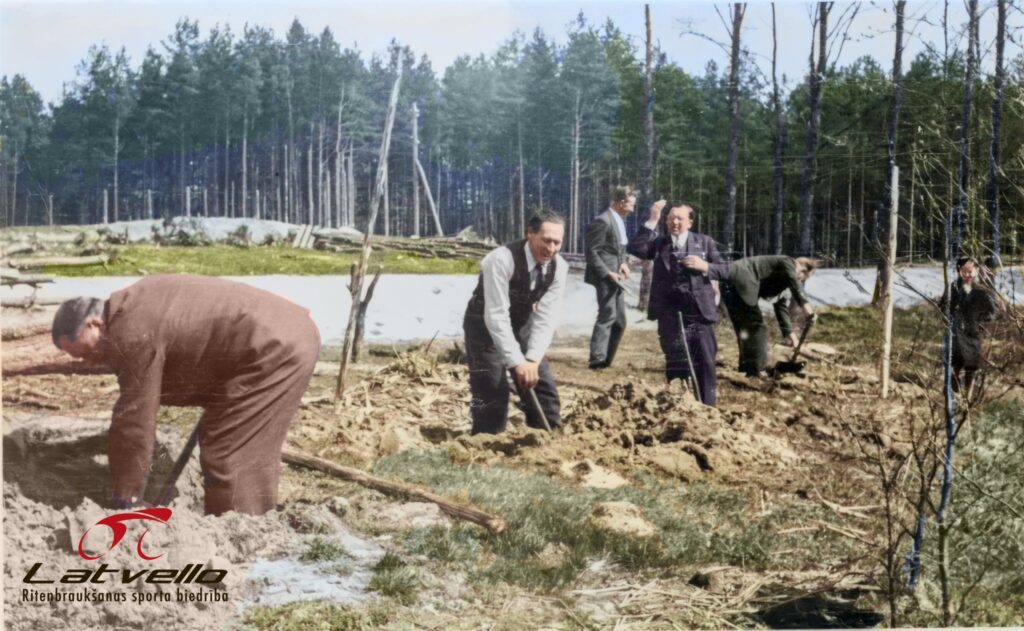
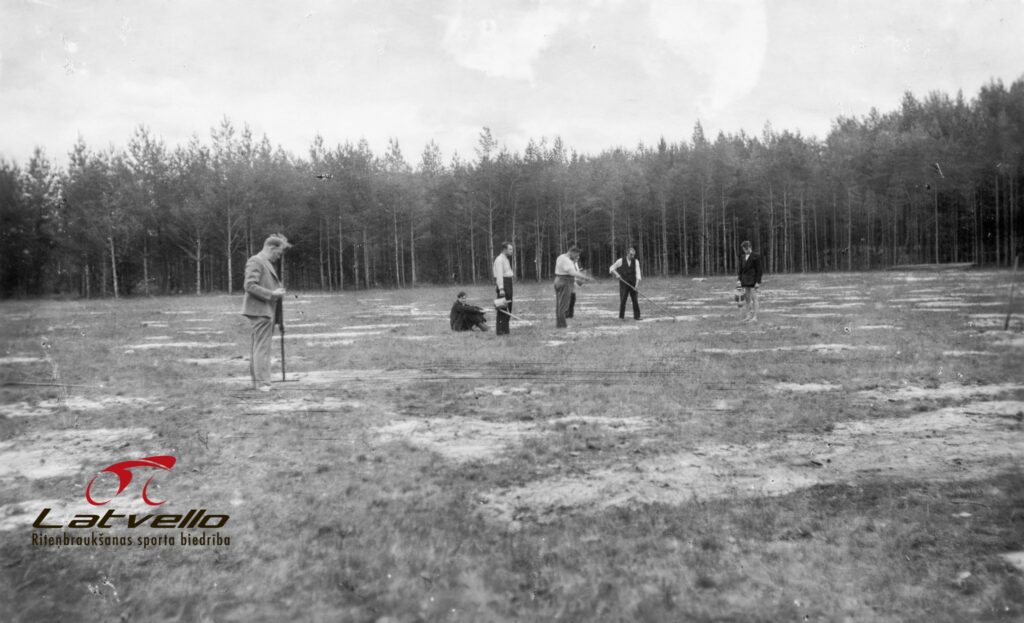
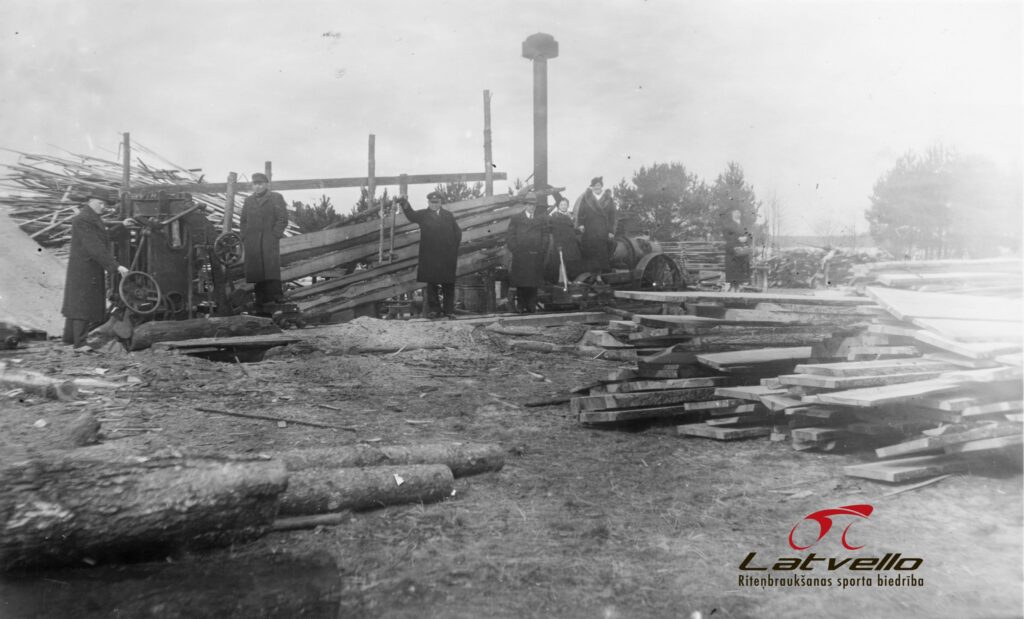
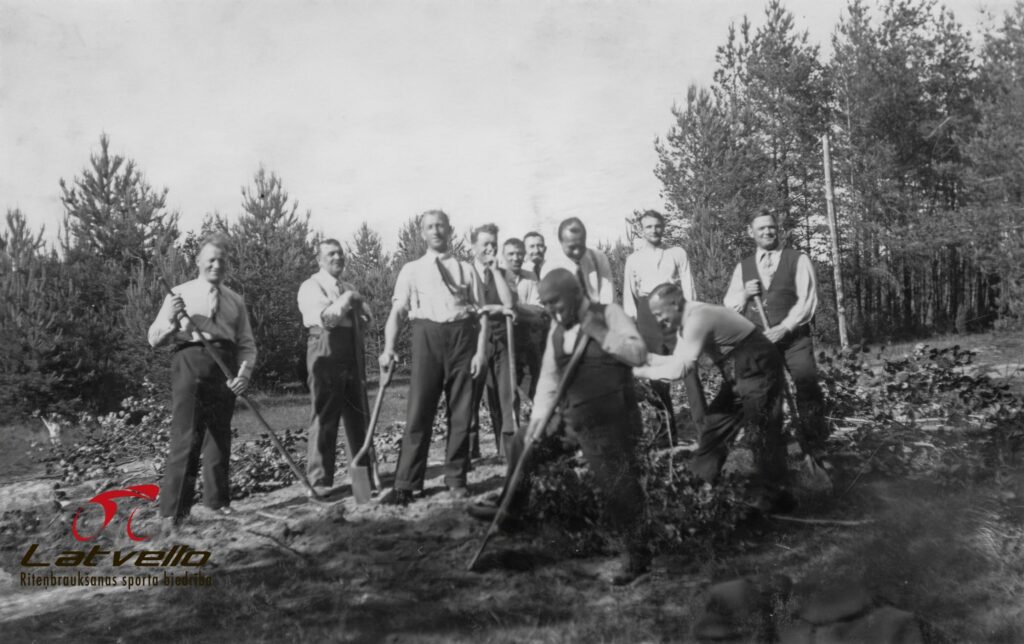
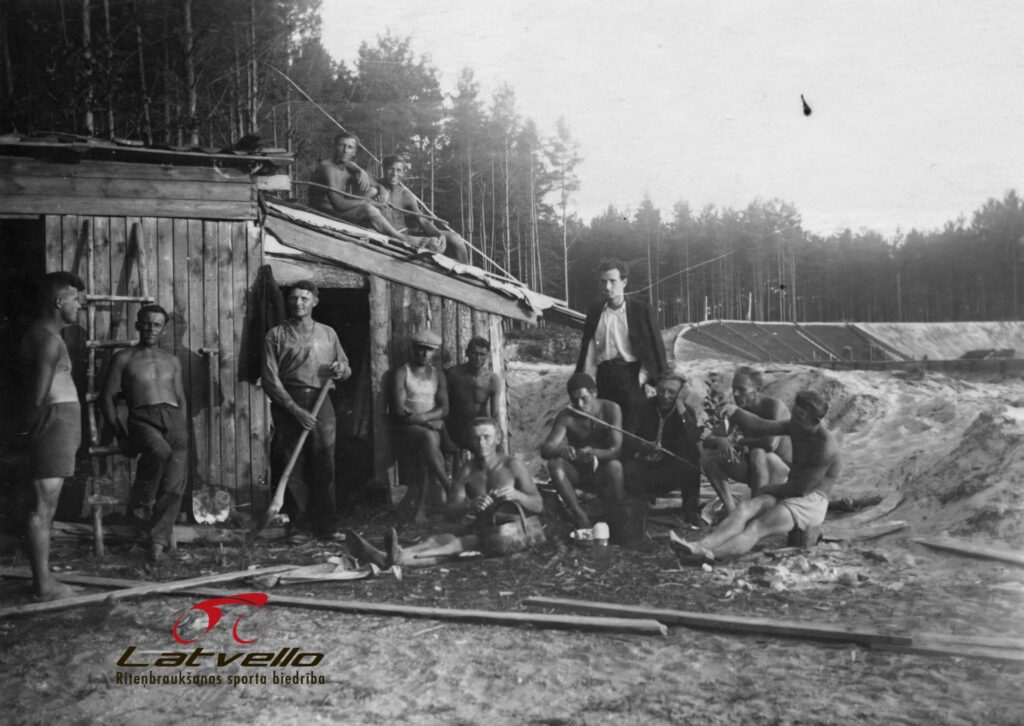
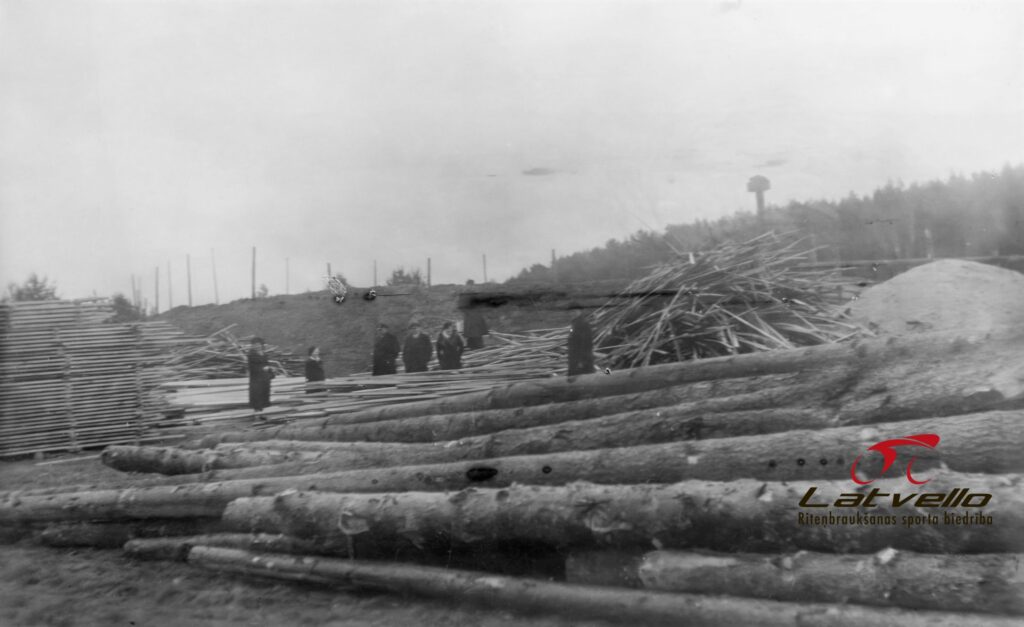
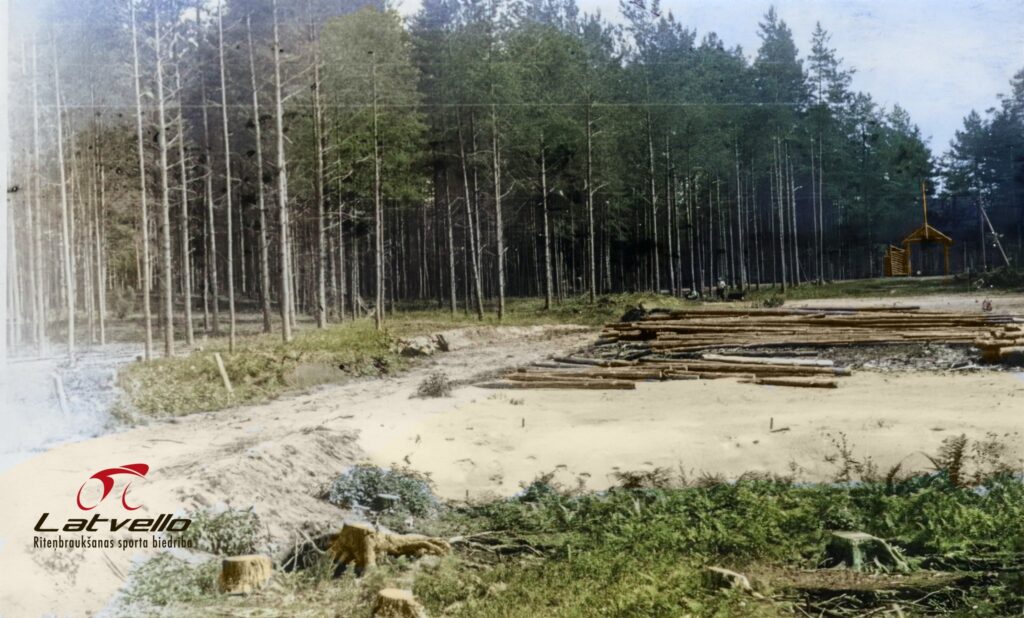
As a donation, we have received twenty-three photographs showing the beginning of preparatory works at the future “Senču sila” velodrome on the shore of Lake Baltezers.
It is possible that the donated photographs are copies of the original images, taken at a later time (around the 1940s–1950s), as their condition is not the best. To better identify the activities, locations, and people depicted, we have restored the photographs and added color to some of them.
Unfortunately, the reverse sides of the photographs do not indicate the year, the author, or the people shown. However, several photographs bear a stamped name – J. Mieriņš.
During our research, in the 1935 publication of the National Latvian Association of Discharged Soldiers (N.L.A.K.B.) magazine “Latvijas Ērgļi”, we found an article accompanied by two of the photographs donated to us. One shows road improvement works leading to Senču Sils, and the other depicts leveling works of a sports field. The same publication mentions that J. Mieriņš was the treasurer of the N.L.A.K.B. Central Board Presidium.
The article states that in 1932 N.L.A.K.B. purchased a plot of land on the shore of Lake Baltezers, and in the summer of 1933 began clearing the forest – tree stumps were removed, the ground leveled, and grass sown with the aim of creating a football field.
On May 29, 1934, the foundations of a sports pavilion were laid, embedding a metal tube containing newspapers, coins, and a written message. The pavilion was officially opened on July 1, 1934.
On August 19, 1935, the association organized its first cycling race – a 100 km event along the route “Senču sils” – Vidzeme highway.
Another newspaper from 1937 mentions that Frīdrihs Bošs, head of N.L.A.K.B., was the originator of the idea to build a modern velodrome at Senču Sils. It should be noted that in 1912 F. Bošs placed 4th in the Russian Cycling Championship sprint.
By 1937, work on this ambitious project was in full swing – wooden embankments were raised and reinforced, an access road to the velodrome was built, trees were cut down, and stumps removed. In total, around 6,000 m³ of soil were moved, and timber was delivered for the construction of spectator stands. It was calculated that the construction would require 400 m³ of concrete and 10 tons of cement. It was planned to begin track concreting in the spring of 1938 and open it to athletes in the autumn.
Earthworks alone cost the association nearly 8,000 lats. Construction was financed entirely by the association, including through the organization of a valuable-prize lottery.
On September 4, 1938, at 14:00, the velodrome was officially opened. Built over two years, it met international standards – the track length was 333.5 m, width 7.5 m, and spectator stands could accommodate 5,000 people.
Opening competition results:
- 5 km – 1st J. Vilsons, 2nd L. Mednis, 3rd A. Jurjevs
- 3 km juniors – 1st V. Smeķerstans, 2nd Panūzis
- 2 km women – 1st A. Lassi, 2nd M. Ramate
- 3 km Class I – 1st J. Vilsons, 2nd B. Nakutens, 3rd O. Porietis
- Seniors’ race – 1st A. Apsītis, 2nd J. Immermanis, 3rd A. Auns
- 10 km motorcycle speed race – A. Pops
📸 Photo gallery
Please note: copying, reproduction, or any use of the published photographs without written permission from the Cycling Sports Association “Latvello” is prohibited.
Comments, memories, and discussions related to these photographs can be viewed on the association’s official Facebook page under the respective post.
View the article on Facebook